
In the luxury transport industry, first impressions matter—and in 2026, that first impression often happens long before the door of a vehicle is opened. It starts online.
A chauffeur company’s website in 2026 isn’t just a digital business card—it’s a virtual showroom, intelligent assistant, booking engine, and brand statement all rolled into one. In a marketplace where clients expect instant answers, luxury visuals, and frictionless service, your website must deliver sophistication with speed.
Here’s what that looks like.
1. Quiet Luxury in Design
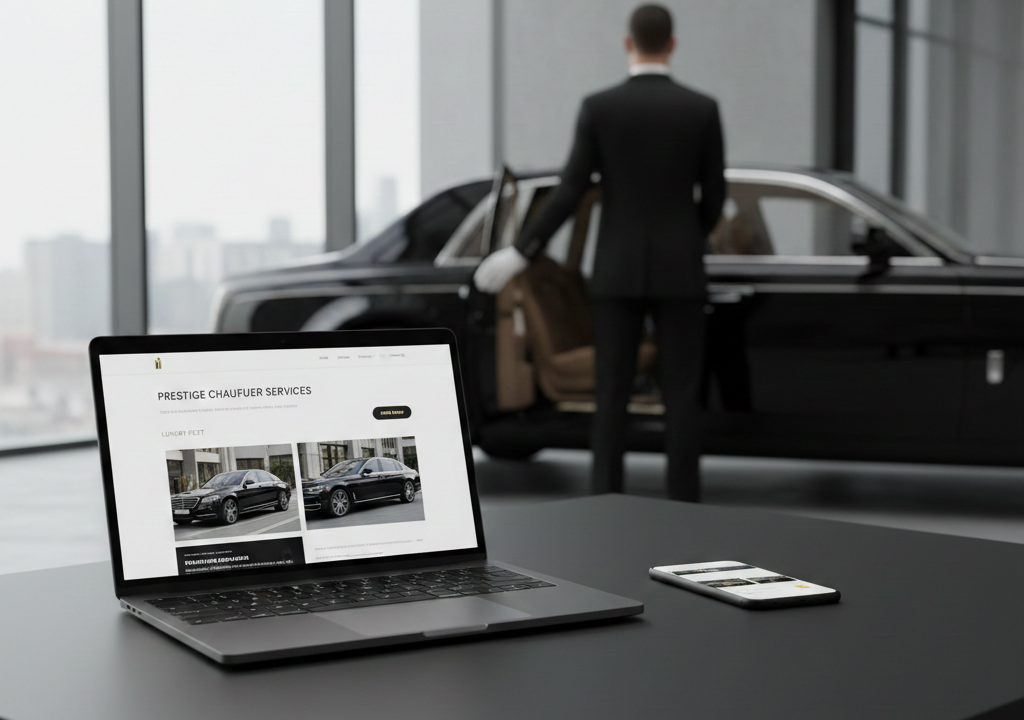
2026 websites are moving away from loud colors, generic stock images, and cluttered layouts. The best chauffeur sites now follow the trend of “quiet luxury”—refined, minimalist interfaces that emphasize elegance through space, typography, and subtle animations. Think black and white palettes, gold accents, cinematic photography, and high-resolution shots of vehicles in real-world environments.
Every click should feel intentional. Every page should feel like an experience.
2. Instant Interaction via AI Chat Assistants
Clients in 2026 don’t want to fill out long forms. They want to talk—to their phone, desktop, or even their smartwatch. That’s where AI-powered conversational booking assistants step in.
Modern chauffeur websites now include intelligent assistants that:
- Suggest the best vehicle based on number of passengers and trip type
- Provide instant pricing
- Answer questions like “Do you offer meet-and-greet?” or “Do you serve Gatwick?”
- Offer upsells like return trips, child seats, or corporate billing
These tools are working 24/7—and they never get tired or miss a lead.
3. Mobile-First, Not Mobile-Friendly
In 2026, over 75% of bookings in the executive travel market are made via mobile. A proper chauffeur website is no longer just “responsive”—it’s designed for mobile first.
From one-thumb navigation to tap-to-call and mobile wallet payments (Apple Pay, Google Pay), everything must feel fast, intuitive, and luxurious on a phone screen.
4. Real-Time Availability & Pricing Engine
Luxury doesn’t mean vague. Modern clients—especially executives and PAs—expect real-time availability and dynamic pricing, just like when booking a flight or five-star hotel.
Your website should allow users to:
- See live vehicle availability
- Get exact pricing (before taxes or fees)
- Book instantly with payment confirmation
- Schedule return trips or multi-stop routes without having to call
5. Integrated Reviews & Social Proof
Trust is currency. In 2026, the most effective chauffeur websites feature curated testimonials, star ratings, and video reviews—right next to service descriptions. Bonus points for integrating verified reviews from platforms like Trustpilot or Google Business.
6. Ultra-Fast Load Times + SEO Optimization
Speed is luxury. A 2-second delay in page load can cost bookings. The best chauffeur companies now invest in ultra-fast hosting, clean code, and AI-enhanced SEO strategies to dominate local and international searches.
7. Emphasis on Sustainability
As EV fleets become the norm, websites are now highlighting eco-conscious service options with dedicated sections, badges, or filters like:
- “All-electric rides”
- “Carbon offset options”
- “Green business travel”
Clients increasingly want their values reflected in how they travel—and how that’s communicated online.
Final Thought
In 2026, your website is more than your brand’s face—it’s its handshake, voice, and best salesperson. It should reassure, inform, and convert—all while reflecting the discretion, professionalism, and prestige that clients expect from a true chauffeur experience.
If your website isn’t working for you 24/7, it’s not working hard enough.